
At a recent event, the assembled audience of Facilities Managers were told by the ergonomist presenter that ‘the DSE (Display Screen Equipment) Regulations are no longer a legal requirement’. This shocked me because a) it is not true and b) nobody questioned the statement! Maybe, like me, other delegates thought they must have misheard or, alternatively, thought they should first go back to the office and check if there had been some dramatic new HSE directive that nobody knew about.
Perhaps I did mishear or the presenter made an equivocal statement that I misunderstood. Either way, it started me thinking.
Assessing a mobile workforce
For the avoidance of doubt, the ‘DSE Regulations’ have had no change of legal status and continue to be mandatory. What is now being debated is their relevance in the agile workplace. Indeed, when I queried the statement with the ergonomist afterwards, the response was ‘some companies are now treating the Regulations as guidance and not completing full workplace/workstation assessments’. This seems to me rather like saying ‘my car is capable of 180mph so the 70mph speed limit is no longer relevant’. You may or may not share this view but, either way, it does not change the law.
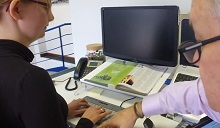 I have heard the rationale that, if a user spends only two days a month at an office desk, then assessing the work setup is pointless. However, it is not pointless: it is a requirement. Apart from its legal status, it is also a crucial part of the education process. With the mobility that knowledge workers now enjoy, it has never been more important to make individuals aware of their posture, the meaning of good ergonomics and what they can do (anywhere) to protect their own health and optimise their wellbeing. A good assessment process is much more than a box ticking exercise: it includes education about what needs to be achieved for good posture, why that is important and how to achieve it.
Where we come in
Do you know how to protect your workers from the risks of working with display screen equipment (DSE) regardless of their place of work? We offer tailored advice, guidance and training and carry out DSE assessments.
Contact us online or call our expert team on 0345 345 0898.